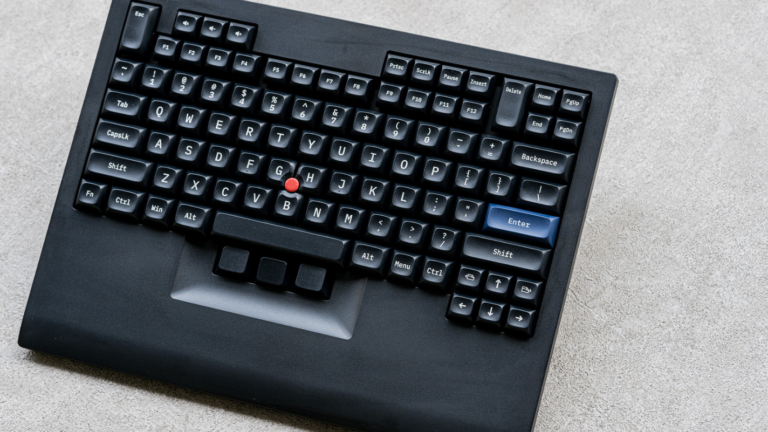
Some time ago I performed switch to the magnificent TEX Shinobi mechanical keyboard. But, with need of usage of 2 laptops on the same table with BT switch between them, popped up urge to utilize more space-efficient setup – hanging laptops on the stands and use the KVM to switch between them.
This configuration, despite the visual simplicity, lead to number of quite weird obstacles, that with the closer look become if not challenging, than annoying:
- Use BT to switch between 2 laptops from the keyboard itself, that require 2 actions, instead of 1. Of course such concept works only on paper, but not in day-to-day routine
- Use USB to connect to KVM switch. It seems to be more simple and robust, but – with cables, that goes against wireless keyboard BLE module idea.
Originally, it was an idea to use an external BT dongle to connect HID devices there, but Device Manager couldn’t accept my workaround, as well as MS doesn’t support such configuration. So, not all of the ideas would work in this case. MacOS, that stands as second machine, also can’t handle such setup.
After obvious googling, finally got proper name – BT-USB proxy. Unfortunately, in a real world no one need this device to be manufactured in a proper way (BTW, why?), but it still possible to create something from factory devices, like… 20 years old D-link.
No, thank you.
Another option – ESP32, that seems to be more acceptable only for HomeAssistant implementations, but not with HID-devices.
Finally, acceptable option was found – magnificent hid-remapper based on Seeed Studio Xiao nRF52840 chip.
Multiprotocol Bluetooth SoC supporting Bluetooth LE, Bluetooth Mesh, NFC, Thread and Zigbee
https://www.nordicsemi.com/Products/nRF52840
The nRF52840 SoC is the most advanced member of the nRF52 Series. It meets the challenges of sophisticated applications that need protocol concurrency and a rich and varied set of peripherals and features. It offers generous memory availability for both Flash and RAM, which are prerequisites for such demanding applications.
The nRF52840 is fully multiprotocol capable with full protocol concurrency. It has protocol support for Bluetooth LE, Bluetooth mesh, Thread, Zigbee, 802.15.4, ANT and 2.4 GHz proprietary stacks.
The nRF52840 is built around the 32-bit ARM® Cortex™-M4 CPU with floating point unit running at 64 MHz. It has NFC-A Tag for use in simplified pairing and payment solutions. The ARM TrustZone® CryptoCell cryptographic unit is included on-chip and brings an extensive range of cryptographic options that execute highly efficiently independent of the CPU. It has numerous digital peripherals and interfaces such as high speed SPI and QSPI for interfacing to external flash and displays, PDM and I2S for digital microphones and audio, and a full speed USB device for data transfer and power supply for battery recharging.
Exceptionally low energy consumption is achieved using a sophisticated on-chip adaptive power management system.
To my shame, I never came across this device before, but it’s definitely seems to be very promising for future projects. Also, this device flashing process was really user-friendly.
Another part of this activity is mapping of the BT device, that could be done with remapper site.

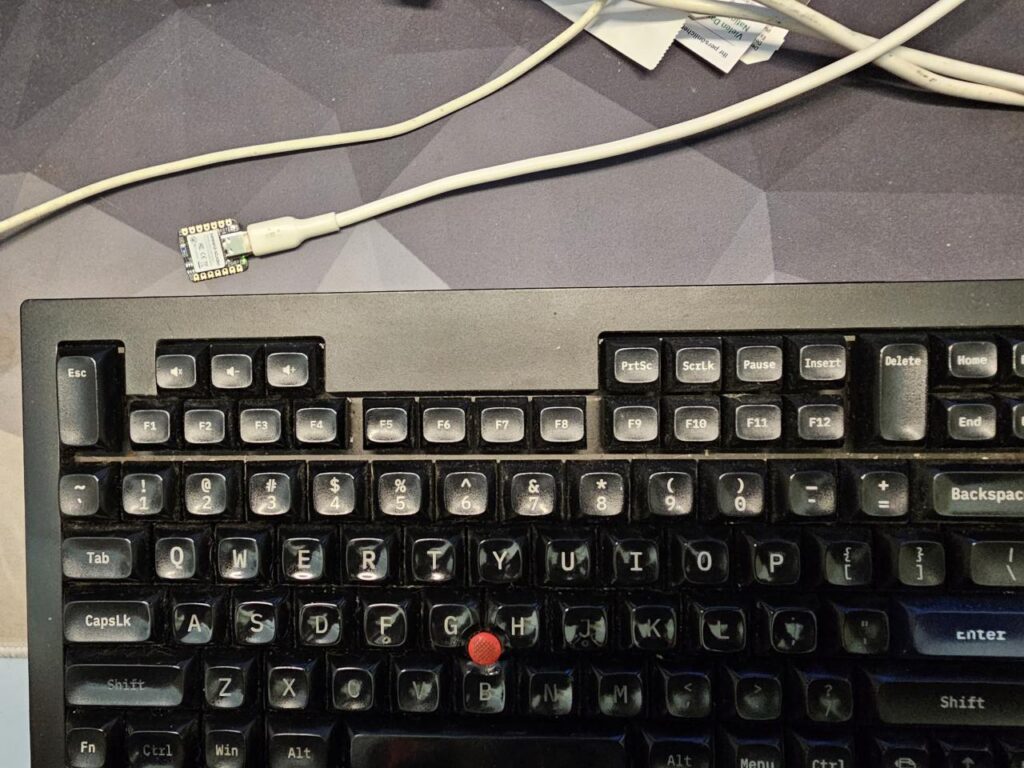
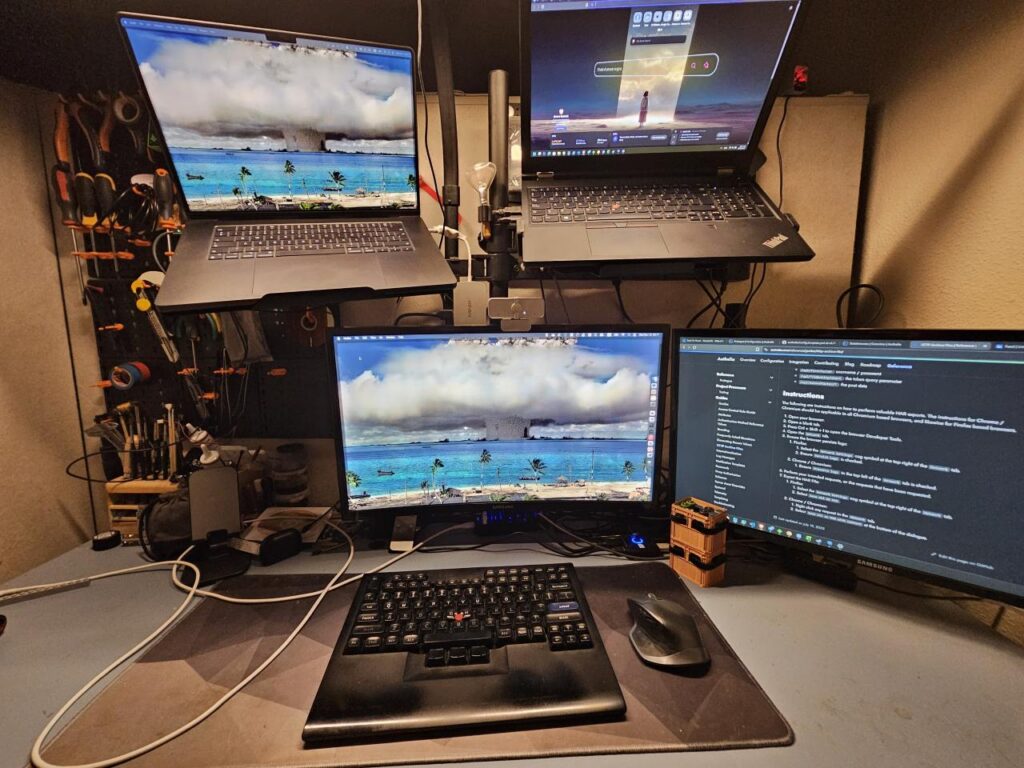
As a conclusion – such a confusing configuration gives enough flexibility to use, applicable only within home usage due to security concerns, but still interesting to implement, if no any other option available. Idea and approach quite similar to Logi Unified Receiver, that makes this project not so stupid.